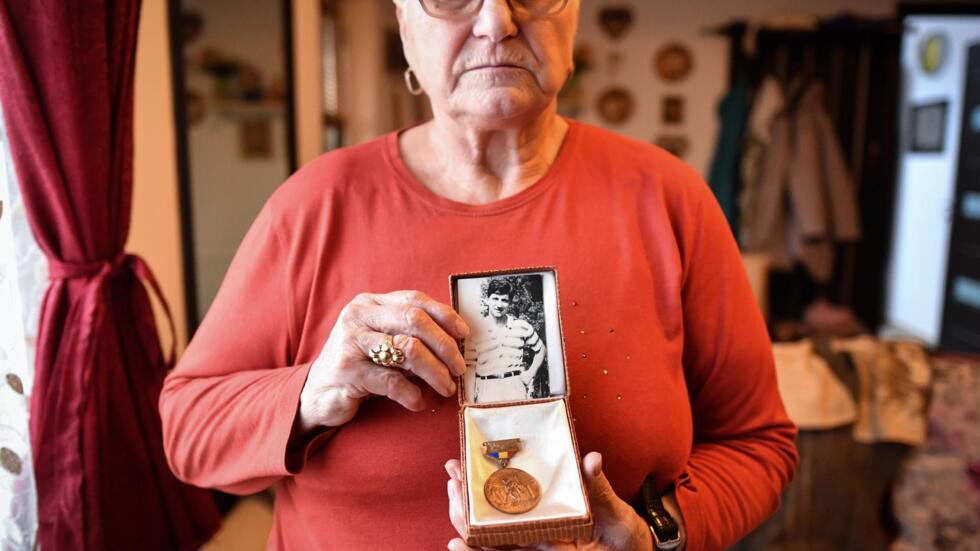
Fact Checking articles on the 30th Anniversary of the Romanian Revolution (II): Romania’s 1989 revolution generation await ex-president’s trial (29 November 2019; Elena Bancila, mama lui Bogdan Serban Stan)

https://rolandothomassonphd.home.blog/2019/11/10/fact-checking-articles-on-the-30th-anniversary-of-the-romanian-revolution-i-most-shocking-revolution-of-1989-still-casts-a-shadow-on-europe-6-november-2019/

Romania’s 1989 revolution generation await ex-president’s trial

https://www.france24.com/en/20191129-romania-s-1989-revolution-generation-await-ex-president-s-trial

Bucharest (AFP)

On the morning of December 22, 1989, Bogdan Stan drank his usual cup of coffee and went to join the wave of protests against Romania’s communist regime.

Shortly after that, he was shot and killed in front of the public TV building.

Almost 30 years later, his mother Elena Bancila is pinning her hopes for justice on the trial of former president Ion Iliescu for crimes against humanity — the most prominent leader to face charges.

Bancila, now 75, is among the victims gathering for a preliminary hearing in Bucharest on Friday, the first step in a trial expected to take months.

She believes Iliescu, who took control of the government on December 22, is responsible for the death of her son.

The 89-year-old former leader, once a senior communist who served as the first president of post-revolution Romania, rejects the accusations and is not expected to appear in court on Friday.

Romania was the last Soviet satellite to overthrow a communist regime during a bloody revolution that began on 15 December 1989 in the western city of Timisoara.

Seven days later, hundreds of thousands took over the centre of the capital Bucharest.

Dictator Nicolae Ceausescu fled in a helicopter but was arrested along with his wife and executed on December 25 after a summary trial.

– ‘Assassin behind the assassins’ –

Iliescu had already taken power by then and prosecutors accuse him of “contributing to the institution of a generalised psychosis” by spreading misinformation about supposed terrorists loyal to Ceausescu.

Prosecutors say Iliescu’s pronouncements increased the risk of “instances of friendly fire, chaotic shooting and contradictory military orders”, with 862 people killed after December 22.

According to historian Madalin Hodor, the suggestion of the presence of “terrorists” was an attempt to divert attention from killings committed by the Securitate secret police and the army in the weeks leading up to Ceasescu’s fall.

An investigation into the bloody aftermath of the revolution has been opened and closed several times over the past three decades, adding to the pain and frustration of survivors and families of victims who long for justice.

Marius Mioc, who participated in the early hours of the uprising of Timisoara, told AFP: “The presence in high public office of people whose interest was to hide the truth has diverted the investigation and delayed the start of the trial.”

“Iliescu is the assassin behind the assassins,” says a sobbing Elena Bancila, who has kept her son’s blood-stained trousers and his bullet hole-ridden coat.

“He wanted to keep Romanians indoors, afraid that they would also rise up against communism’s second tier, to which Iliescu belonged,” she added.

– ‘We were humiliated’ –

In addition to Iliescu, former deputy prime minister Gelu Voican-Voiculescu and former military chief Iosif Rus will also be tried for crimes against humanity.

Nicoleta Giurcanu, a slight 44-year-old woman with short blonde hair, is another of the victims who has spent years trying to “reconstruct the puzzle” of her traumatic experiences in December 1989.

On 21 December, at the age of 14, she joined anti-Ceausescu protesters in central Bucharest alongside her brother and her father.

Spared by the bullets that killed 50 other people that night, they were arrested and taken first to police headquarters and then prison.

“It was horrible, we were beaten, humiliated,” she told AFP.

Separated from their father, Nicoleta and her brother were not released until the evening of December 23.

Nobody has ever been tried for the abuses.

She also holds Iliescu responsible, saying his party had “risen to power by taking advantage of the crimes of December 1989”.

“I want to see Iliescu in prison if it’s only one day,” she says.

Bancila, who for 30 years has kept her son’s unwashed last coffee cup, thinks the trial might finally “wash the shame of a judiciary which pretended it was free”.

“I’ve been waiting for justice for 30 years, because they took my son’s right to enjoy the freedom he was fighting for in the street”, she said.

…………………………………………………

Elena Bancila’s is a sad and tragic story.  Of course, it is very important to know the details of how her son, Bogdan Serban Stan, died, and how the broader public narratives of December 1989 have distorted memory and interpretation of those details.  Let us go back then, to 1990-1991, when the details were still fresh, for Elena Bancila, and for those who were with her son, when he was shot…

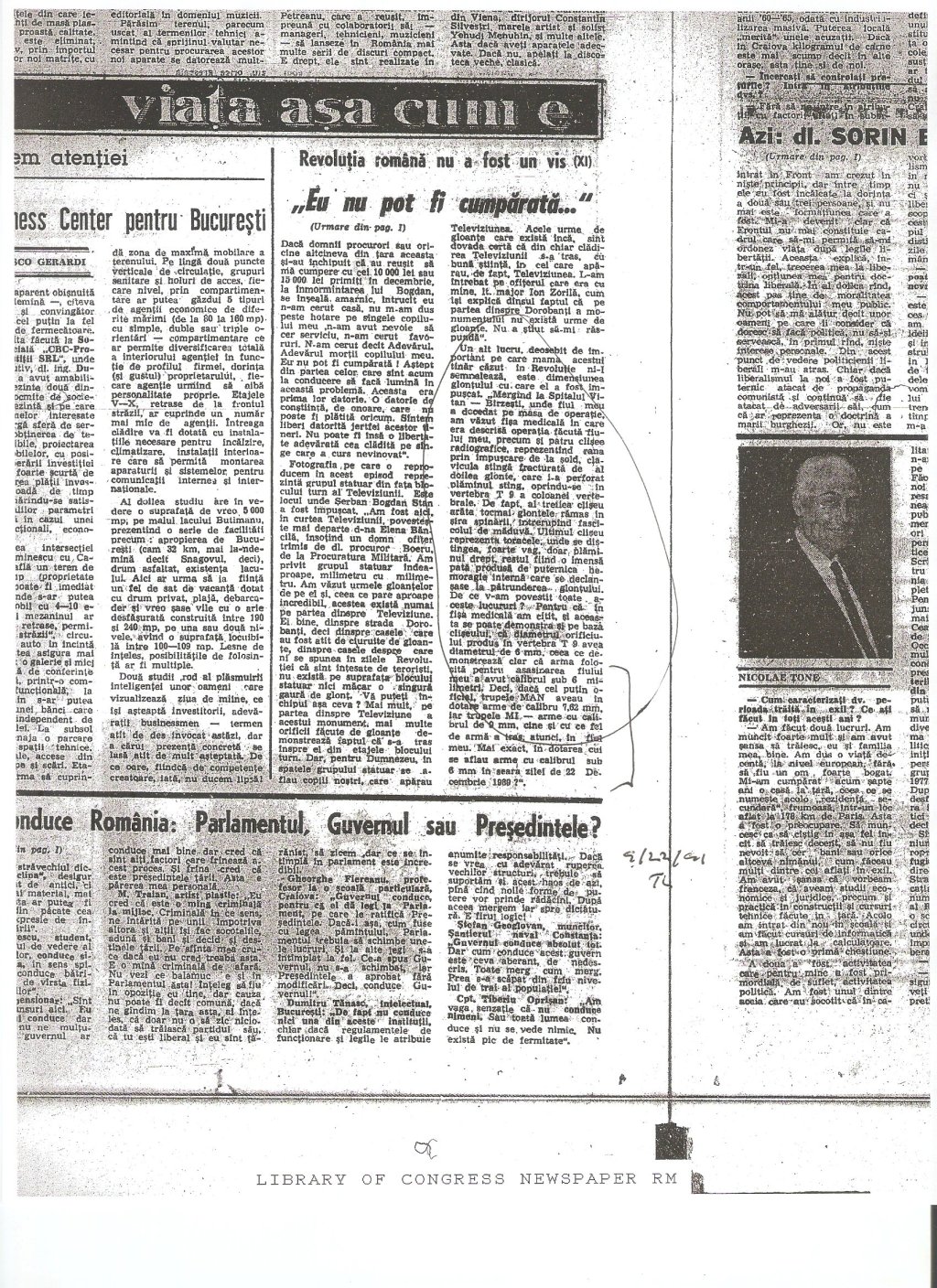
“Un alt lucru, deosebit de important pe care mama acestui tinar cazut in Revolutie ni-l semnaleaza, este dimensiunea glontului cu care el a fost impuscat. ,Mergind la Spitalul Vitan-Birzesti, unde fiul meu a decedat pe masa de operatie, am vazut fisa medicala in care era descrisa operatia facuta fiului meu, precum si patru clisee radiografice, reprezentind rana prin impuscare de la sold, clavicula stinga fracturata de al doilea glonte, care i-a perforat plaminul sting, oprindu-se in vertebra T 9 a coloanei vertebrale. De fapt, al treilea cliseu arata tocmai glontele ramas in sire spinarii, intrerupind fascicolul de maduva. Ultimul cliseu reprezenta toracele, unde se distingea, foarte vag, doar plaminul drept, restul fiind o imensa pata produsa de puternica hemoragie interna care se declansase la patrunderea…glontului. De ce v-am povestit toate aceste lucruri? Pentru ca in fisa medicala am citit, si aceasta se poate demonstra si pe baza cliseului, ca diametrul orficiului produs in vertebra T9 avea diametrul de 6 mm, ceea ce demonstreaza clar ca arma folosita pentru asasinarea fiului meu a avut calibrul sub 6 milimetri. Deci, daca cel putin oficial, trupele MAN aveau in dotare amre de calibru 7,62 mm, iar trupele MI–arme cu calibrul de 9 mm, cine si cu ce fel de arma a tras, atunci, in fiul meu. Mai exact in dotarea cui se aflau arme cu calibrul sub 6 mm in seara zilei de 22 decembrie 1989?”

Cristina Balint si Nicolae Tone, “Eu nu pot fi cumparata,” Tineretul Liber, 22 septembrie 1991.

image0

image0-001

,Am insistat la dl. procuror Mugurel Florescu sa se faca ancheta, sa se vada cine a admis folosirea unei astfel de arme, cae este de productie romaneasca. Mi s-a raspuns ca o sa se ancheteze, dar sa am rabdare. Nici pina azi, iata, nu mi s-a dat raspuns, nu s-a facut nici o cercetare in privinta aceasta…’ Bineinteles, afirmatiile d-nei Bancila trebuie verificate. Un raspuns in aceasta directie al organelor de ancheta trebuie sa fie dat fara intirziere. De ce el nu a fost, oare dupa luni si luni de zile, inca formulat? Sa fie, apoi, o legatura directa intre refuzul anchetarilor de a efectua o cercetare atenta a depozitiei mamaei tinarului impucat in decembrie si faptul, iarasi dubios, ca in clipa de fata nu se stie care este soarta celor patru radiografii facute lui Serban Bogdan Stan in scurta perioada de spitalizare de dinainte de deces? ,Nimeni nu stie ce s-a intimplat cu aceste clisee, ne spune nedumerita d-na Elena Bancila. Am sesizat Procuratura, aceste radiografii, care au termen de pastrare de cel putin 15 ani, fiind foarte importante. In special cea care face dovada ca glontele oprit in vertebra T9 a coloanei vertebrale este de un calbiru mai mic de 6 mm. Este cu totul incredibil ceea ce se intimpla….”

Cristina Balint si Nicolae Tone, “Daca altfel nu se poate, voi cere deshumarea fiului meu,” Tineretul Liber, 24 septembrie 1991.

image0-002

image0-003

“…Ma primeste dl. Tatulici plin de amabilitate si incepe sa ma chestioneze, sa vada ce stiu, cit stiu daca pot sau nu dovedi ceva din ceea ce spun…I-am spus doar atit, ca Bogdan a fost impucat cu arma sub 6 mm. ,De unde stiti aceasta?’ m-a intrebat. ,Pai daca orificiul din sira spinarii, din vertebra T 9, este de 6 mm, i-am raspuns automat obiectul care a produs perforarea trebuie sa fie mai mic decit 6 mm.’ I-am spus si faptul ca am aflat ca arma respectiva abia dupa Revolutie a aparut in dotarea armatei. Si mi-a pus atunci o intrebare: ,Puteti sa-mi dovediti ca aceasta arma nn era in dotarea armatei pe 22 decembrie?’ La care i-am raspuns: ‘Dar d-ta poti sa-mi dovedesti mie ca aceasta arma era in dotarea armatei, ca sa pot sa acuz armata de asasinarea copilului meu?”

Si apoi tergiversarea cercatorilor legale pe acest dosar, disparitia celor patru radiografii, nelamurirea in nici un fel a faptului daca armele cu calibrul sub 6 mm au fost sau nu folosite–si daca da de catre cine–in zilele lui Decembrie 1989….

Cristina Balint si Nicolae Tone, “De ce domnule Tatulici?” Tineretul Liber, 25 septembrie 1991.

image0-004

articolul din Tineretul Liber invocat era despre Bogdan Serban Stan, jucator de rugby, impuscat cu un glont “vidia 6 mm” (Elena Bancila, Trage lasule!, p. 94)


image-86

One of the particularly moving stories of the December events is that of Bogdan Serban Stan, 21 years old and one of three members of the under-22 Rapid Bucuresti rugby team who perished in the events.  Bogdan’s mother, Elena Bancila, was determined not to let the memory of her son be forgotten with his tragic death.  Bogdan had demonstrated on the night of 21-22 December in University Square and returned to fight at Television where on the night of 23 December at 3:50 am he was shot by an assailant in civilian clothes:  “The path of the ‘6 mm vidia’ cartridge blew a hole through his lung and ‘passed through’the T9 section of his spine, coming to a rest vertically in the bone marrow.”[45]

[45] Elena Bancila, Trage Lasule! (Bucuresti:  Editura Victor Frunza, 1990), pp. 65-66 (from Adevarul, 13 January 1990), and quote from pp. 94-95.  Bancila also claimed that a hospital nurse had told her some of those killed appeared to have been the victims of “exploding bullets” (see the series by Cristina Balint and Nicolae Tone in Tineretul Liber in September 1991, particularly part XI “Eu nu pot fi cumparata [I can’t be bought],” and part XII “Daca altfel nu se poate, voi cere deshumarea [If there is no other way, I’ll ask for his body to be exhumed], 22 and 24 September 1991 respectively).  In this series, the bullet that killed her son is referred to as “under 6 mm.”

from “ORWELLIAN…POSITIVELY ORWELLIAN:” PROSECUTOR VOINEA’S CAMPAIGN TO SANITIZE THE ROMANIAN REVOLUTION OF DECEMBER 1989 (Part III, A Fistful of Bullets: Unregistered, Atypical Munitions…)

https://romanianrevolutionofdecember1989.com/2009/11/14/gloante-vidia-de-56-mm-22-24-decembrie-89-zona-tvr/

https://romanianrevolutionofdecember1989.com/rugbistul-bogdan-serban-stan-mama-lui-elena-bancila-1991/


Nicolae Stefan Soucoup relates here the places from which the “terrorists” fired on the TV building and that they used infrared weapons whose light could be seen in the night.  He then goes on to talk about the third front of battle from which the terrorists fired–from within the ranks of those defending the Television building.  “Infiltration” was indeed a feature of the urban guerilla warfare in the “lupta de rezistenta” of the “terorists” (details to which I shall return at a later date).  Soucoup then relates the tragic death of the well-known rugby star Bogdan Serban Stan, whom Soucoup claims told him:  “I was shot by a civilian near me,” in Soucoup’s estimation, one of the terrorists who had infiltrated into the ranks of the defenders.  In Soucoup’s account in the 1990 volume Revolutia romana in direct (pp. 133-134; posted below), he mentions the unusual caliber and type of bullet with which some of those in the vicinity of Television were killed or wounded.

image0

(Nicolae Stefan Soucoup, interview by Nicolae Tone, Tineretul Liber, 21 decembrie 1991, page 3; xerox from Library of Congress)

–Si aici am vazut acea luminita rosiatic-violacee, luminita zarita prima oara in Piata Dorobanti.  Militarii de profesie mi-au confirmat ca este vorba despre o luneta cu infrarosii.  Fiind noapte, nu aveam tinta decit aceste luminite ,plimbatoare’.  Spun ,plimbatoare’ pentru ca ea aparea la intervale diferite in diverse locuri, ceea ce m-a determinat sa cred ca nu erau prea multi tragatori inauntru.  Erau putini, dar nu trageau niciodata din acelasi loc….Eram asezati in spatele cabinei de la intrarea de pe Calea Dorobanti, fiind prinsi intre trei tiruri de gloante.  Se tragea din fata noastra, de pe strada Pangratti, cit si din lateral, din imobile de pe Dorobanti, strada Teheran, strada Pictor Rosenthal….(–Si al treilea tir de unde venea?)–Al treilea tir venea dinspre curtea Televiziunii si din blocul Turn al Televiziunii, dar ne tintea pe noi, care aparam institutia, cit si pe manifestanti, si nu pe cei care ne atacau.  Acest tir apartinea celor infiltrati printre noi, dar care, in realitate, erau de cealalta parte a baricadei.  (–Va rog sa-mi explicati mai pe larg aceste afirmatii.)–Va pot da un exemplu, foarte cunoscut deja.  In dimineata zilei de 23 Decembrie, pe la orele 4, la o mica distanta de mine, respectiv, linga grupul statuar din fonta, a fost impuscat un tinar, Stan Bogdan Serban, despre care chiar dv. ati scris pe larg.  Adus pe subtiori de doi revolutionari, acesta ne-a spus cu vocea stinsa:  ,Am fost impuscat de un civil de linga mine!’  Aceste cuvinte ale lui nu le pot uita.  Mi-este foarte clar ca Bogdan Serban a fost victima tocmai a ,teroristilor’ infiltrati printre noi.

image0

Nicolae Stefan Soucoup:  Intre orele 5,00 si 7,00 [23 decembrie 1989] trageri intense.  La un moment dat, dintr-una din cladiri se trage asupra sa cu arma cu infrarosu, calibru 5,6 mm (retine glontul)….In ziua de 24 decembrie ora 7 tir puternic spre casa scarii de la pasarela (din cladirea Studiourilor); gloantele care ricosau erau d calibrul 5,6 mm.

image0-001

Nu uitati! N-au existat teroristi in decembrie 1989: “Amintirile unui terorist,” Revista Jandarmeriei, 1992.

Fullscreen capture 11272019 93656 PM

Nicolae Rotaru, “Amintirile unui terorist:  TERORISTUL,” Revista Jandarmeriei, nr. 8 (31 martie 1992), p. 6

http://www.revista.jandarmeriaromana.ro/wp-content/uploads/2018/10/8_1992-comp.pdf

“Executati Ciumafaia trei-doi-zero.  Sint eu, Arlechinul patru sute.”

Fullscreen capture 11272019 94443 PM

Nicolae Rotaru, “Amintirile unui terorist:  Anonimele,” Revista Jandarmariei, nr. 10 (4 mai 1992), p. 6.

http://www.revista.jandarmeriaromana.ro/wp-content/uploads/2018/10/10_1992-comp.pdf

https://www.sri.ro/upload/intelligence14dec.pdf

despre viitorii jandarmi in decembrie 1989:

Col. Porumbelu ne-a tacut un mic istoric din care am sa citez:  “Din 22 dec. in 28 am fost teroristi!  Din 28 pina in martie am fost M.Ap.N.-isti.  Pina pe 5 iulie sintem trupe de jandarmi….

(Nicolae Stefan Soucoup, interview by Nicolae Tone, Tineretul Liber, 21 decembrie 1991, page 3; xerox from Library of Congress)

Nicolae Stefan SoucoupAm fost martor, tot in 23 Decembrie, la audierea unui cetatean prins in curtea Televiunii si care era ranit in zona toracica stinga.  Era imbracat intr-un combinezon kaki.  Este vorba despre ,celebrul’ Dutu S., care a actionat in Calea Dorobantilor.  El a iesit din casa in flacari de la nr. 228 de pe Calea Dorobantilor, colt cu Teheran.  A traversat strada, a zarit gardul viu si a tras o rafala asupra unui tanc.  A fost anihilat imediat.  Iesind din casa in flacari, avea cenusa in par, cenusa si moloz in rizurile cizmei, arsuri pe combinezon.  A fost legat si dus intr-o camera de montaj la Etajul 1, camera fara ferestre si cu acces doar din hol.  Aici am state de vorba cu el impreuna cu o criminalista de la Procuratura, Rodica Chebeleu, care l-a abordat din punct de vedere juridic.  Eu am depus o munca pe care n-am facut-o niciodata:  am apelat la elementele de suflet dragi fiecariua dintre noi:  “N-ai vazut, erau femei, copii, daca i-ai omorit chiar pe ai tai?”  I-am promis viata, in schimbul informatiilor pe care ni le va oferi….Dupa declaratiile lui era din garda personala a perechii dictatoriale.  Avea gradul de sergent major si era instruit in subunitatea de la Rosu.  Erau circa 120 de oameni comandati de un locotenent major Iovanovici, Dutu fiind ajutorul comandantului de pluton.  N-a recunoscut ca  a tras, dar miinile innegrite, imbracamintea il demascau.  Era socat, dar foarte abil in a face pe obositul, pe extnuatul.  Avea el o poveste pusa la punct, dar in conditiile date probabil ca incerca s-o adapteze.  Facea din cind in cind crize de pierdere a cunostintei.  Consuma foarte, foarte multa apa, probabil datorita starii pricinuite de rana pe care o avea.  Erau momente cind gaseam la el cite o privire cercetatoare, care contrazicea starea de sfirseala pe care o manifesta.  Deci, era instruit sa reziste la orice forma de interogatoriu….De la el am aflat, in final, sistemul de atac asupra Televiziunii.  Cunoscind modul de a actiona, implicit a recunoscut ca a facut patre dintre atacatori.  El asigura dispozitivul numit ,FALEAZA’.  Din declaratiile lui a aparut si modul in care se incercau diversiuni in interiorul Televiziunii.  A amintit de un asa-zis dispozitiv secret ,CUTIILE VERZI’ care dupa mine, nu puteau fi decit cupoletele din curtea Televiziunii inconjurate de vegetatie.  Ventilatiile asigurau si ele controlul, pe verticala si pe orizontla, in toate corpurile Televiziunii.  Am aflat ca prin canalizre, printr-o casa conspirativa din spatele Televiziunii (din strada Zambacian), se putea intra in subsolul institutiei.  De aici, prin gurile de ventilatie se putea iesi oriunde se vroia.  Orice gura de ventilatie era un ochi care isi alegea victima.  Asa se si explica de ce in subsol la corp-studiouri au fost gasiti multi morti.

Silviu Stefan Dutu’s referenced unit was U.M. 0530 Bucuresti (Rosu), Special Unit 1 Securitare Bucharest.

Istoria Unităţii Speciale 70 Jandarmi Protecţie Instituţională Bucureşti este una destul de zbuciumată, trecând rând pe rând prin mai multe etape organizatorice. Dintre cele mai importante putem aminti: în anul 1949, unitatea purta denumirea  Batalionul Securitate Gărzi Capitală (rezultat din transformarea Batalionului Jandarmi Gărzi Capitală) şi ulterior s-a transformat în Regimentul Securitate Gărzi Bucureşti (avea în subordine Batalionul 1 Securitate Gărzi, Batalionul 2 Securitate Gărzi şi Compania Penitenciare), comandantul fiind, atunci, colonelul Gheorghe Sachetti.  Anii au trecut, au avut loc schimbări în structura organizatorică, dar şi de denumire, iar în anul 1984  Batalionul a fost reorganizat, fiind ridicat la rangul de unitate specială, cu denumirea de Unitatea Specială 1 Securitate Bucureşti, dată la care se schimbă indicativul numeric din U.M. 0609 Bucureşti în U.M. 0530 Bucureşti.  După reorganizarea Jandarmeriei Române din 1 septembrie 1990, Batalionul 1 Jandarmi Bucureşti şi-a desfăşurat activitatea în subordinea Brigăzii 17 Jandarmi Bucureşti (din anul 1998 – Comandamentul de Jandarmi Teritorial Bucureşti), până la data de 1 august 2000, când în urma unei alte reorganizări Comandamentul de Jandarmi Teritorial Bucureşti se desfiinţează. Cu această ocazie Batalionul 1 Jandarmi Bucureşti este restructurat, devenind Unitatea Specială 70 Jandarmi Pază Obiective Bucureşti, dar păstrându-şi indicativul numeric. În anul 2005 unitatea şi-a schimbat denumirea în Unitatea Specială 70 Jandarmi Pază şi Protecţie Instituţională Bucureşti. http://www.jandarmeriaromana.ro/RevistaJandarmeriei/Pagini/ArhivaSiteMai2013.html


“Saptamina trecuta am incheiat un ciclu de 2 saptamini de pregatire si examinare, la Baneasa, pentru obtinerea gradului de subofiter.  Acest ciclu l-am efectuat la Baneasa, deoarece stagiul militar de 9 luni, l-am satisfacut intr-o unitate apartinind Securitatii Statului.

–Ce specific a avut pregatirea?

Am fost antrenati pentru lupta de gherila urbana, in caz de agresiune externa.  Eram organizati in grupuri mici care actionau pentru destabilizarea inamicului, pe teritoriul ocupat de el.

–S-au facut afirmatii in perioada revolutiei, ca nu exista trupe specializate in gherila urbana!  Este adevarat?

Nu!  In cazul in care se face exceptie de notiunea de inamic strain sau agresiune externa, pregatire multor generatii de militari au acest specific.

–Ati fi activat doar in termenul celor 9 luni?

Nu!  Noi sintem la dispozitia lor in permanenta.  Putem fi convocati telefonic sau printr-o alta modalitate conspirativa.  Existe case conspirative si depozite de munitie in plin Bucuresti, de unde ne-am fi aprovizionat cu armament si munitie pentru a efectua ambuscade, aruncari in aer si altele.

–Considerati ca dupa revolutie lucrurile s-au schimbat, cum apreciati ca ati fost chemat tot la o unitate fosta a Securitatii?

Am fost indignati si chiar ne-am manifestat in sensul acesta!  La toate intrebarile noastre n-am primit raspuns.  De abia la sfirsitul stagiului am aflat ca ne-am pregatit, de fapt, la trupele de jandarmi.

–Si pina atunci?

Col. Porumbelu ne-a tacut un mic istoric din care am sa citez:  “Din 22 dec. in 28 am fost teroristi!  Din 28 pina in martie am fost M.Ap.N.-isti.  Pina pe 5 iulie sintem trupe de jandarmi….

[Dinu Ispas, “Banease–Comedie muta ’90” Expres, iulie? /august ? 1990, p. ?]

https://romanianrevolutionofdecember1989.com/2014/01/16/baneasa-comedie-muta-90-si-lupta-de-rezistenta-revista-securitatea/

Fact Checking articles on the 30th Anniversary of the Romanian Revolution (I): Most Shocking Revolution of 1989 Still Casts a Shadow on Europe (6 November 2019)

Because the Fall of the Berlin Wall on 9 November 1989 was such a foundational event, a gamechanger, for the survival of the regimes of communist Eastern Europe, articles on the 30th anniversary of the collapse of communism in the region appear to have clustered around this date.  Thus, articles on the Romanian Revolution of December 1989 have begun to trickle out in different languages.  I will address some of the claims in some of the articles in the following series.

Journalists are unfortunately at the mercy of their interlocutors when it comes to December 1989…

Most Shocking Revolution of 1989 Still Casts a Shadow on Europe

Romania’s transition from communism was far from peaceful.

November 6, 2019, 12:00 AM EST

https://www.bloomberg.com/news/features/2019-11-06/romania-news-30-years-after-fall-of-communism-remains-unsettled

An excerpt:
One man who’s witnessed Romania’s journey at close quarters is Mircea Gheorghe, a former policeman from Targoviste. His story starts in the revolution, when protesters feared the iron hand of the security service, the Securitate, and carries on through Romania’s troubled accession to the EU.  On Dec. 22, 1989, Gheorghe was on a training course in Bucharest when all officers were required to change into civilian clothes and head to where Ceausescu was due to speak. The square was only half full and the police were to make up the numbers. The reason only slowly dawned on him….The regime was dismantling rapidly. Stopped by Securitate officers, Gheorghe and his colleague were told to get back to base, where the military gave them weapons and took them to a cemetery in the west of the capital. They were told to seek out “terrorists” who were hiding there—only no-one was to be found. The officers were just being used as stooges to allow the army to show it was defending the revolution, he said.  “All of a sudden a military helicopter showed up and started shooting at us,” Gheorghe said. “Four or five of my colleagues were killed. I was lucky because I managed to hide and take cover.” The shock took an immediate toll: “A few days later I was completely grey. I was 31.”
The Most Shocking Revolution of 1989 Still Casts a Dark Shadow
Mircea Gheorghe outside the town hall in Targoviste.
Photographer: Rodney Jefferson/Bloomberg
What’s wrong with the above?
1) Mircea Gheorghe is a former policeman [most likely Militie, always a possibility undercover Securitate]
2) He was “on a training course in Bucharest” on 22 December 1989
3) He and the other officers were required to change into civilian clothes
4) Some of his police officer colleagues were killed by a military helicopter, but there were no “terrorists”
The cemetery in question is pretty clearly Ghencea.
Who is more credible about December 1989, Mircea Gheorghe, or the Olympic Sharpshooters who fought in Ghencea?   (And ahem, one would expect Olympic sharpshooters to know a thing or two about the weapons and munitions used by those they engaged…)

Romanian Olympic Shooter Downplays His Role in Revolution

TIMES STAFF WRITER
From every revolution blossom legendary moments.
Paul Revere’s ride. Marie Antoinette’s beheading. A lone Chinese man blocking the path of a Red Army tank in Tien An Men Square.
Situations are magnified when performed in the theater of change.
But sometimes, in this chaotic environment, circumstances become muddled and legends exaggerated.
Last December, the world was entranced by an unfolding drama on the streets of Bucharest, Romania. Previously faceless citizens were voicing opposition to the repressive rule of dictator Nicolae Ceausescu.
In contrast to nearby Czechoslovakia, where the downfall of the Communist Party was accomplished peacefully, Ceausescu was being uprooted by force.
Daily televised reports showed mobs in Bucharest’s Palace Square chanting slogans and opposing the Securitat, the dictator’s private army that controlled the country through intimidation.
In 11 days of bloodshed, many riveting stories were reported. But perhaps none was as captivating as those about Romanian Olympic pistol shooters Ion Corneliu and Sorin Babii, who reportedly volunteered to flush out Communist forces and defend a military target.
Now, though, Corneliu, Romania’s three-time Olympian in pistol competition, says such reports were exaggerated.
“It’s just not true,” he said last week at the 1990 World Cup USA tournament at Petersen’s Prado Tiro Ranges in Chino.
Corneliu, 39, one of six Romanians on an international tour, downplayed his role in last winter’s fighting. He and Tiron Costica, the national team trainer, spoke about the revolution and its legacy with the help of U.S. national pistol coach, Dan Iuga, a Romanian who defected seven years ago.
“The shooters (mostly military personnel) were confined to their units,” Corneliu recalled. “They stayed put and fought from there.”
Corneliu, a major, won a gold medal at the Moscow Olympics and a silver at Los Angeles. Partially because of these performances, he recently was named president of the Romanian Shooting Federation.
During the 11 days that shook Romania, Corneliu had more important concerns than target practice at his military club in the Ghencea neighborhood of northeast Bucharest.
“During the first night of fighting, the captain of our (national) rugby team was killed and a couple others were wounded at our base,” Corneliu said. “Somehow the people were prepared to fight the regime. But you know, it is scary to start to fight. . . . They were shooting real bullets.”
Corneliu said the national shooting team missed the major battles because it was stationed outside the city center. He said that although most of the shooters were military club personnel, they were considered soldiers once the rapid-fire events began.
That was a few days before the actual fighting, Corneliu said. When it was apparent that independent movements from cities such as Timisoara were spreading throughout the country, army leaders were told to suppress the activists.
Commanders, however, emerged as a pivotal opposition force, and earned enormous prestige.
“When the time came for Ceausescu to leave, we received orders to defend our position against anybody who would try to attack,” Corneliu said. “We suddenly became part of the revolution.
“It was very lucky that the army was ordered not to move. If we had received an order to fight against the revolution it would have been a blood bath.
“The army was not trained for this kind of war in the city, and the psychological warfare. The Securitat already had alternate plans in case something like this happened. The army just wondered what it should do.”
In an effort to thwart revolutionaries, Securitat forces tried to overtake strategic points around Bucharest, including television, radio and telephone communication centers, the airport and Corneliu’s base.
Corneliu said Ceausescu’s forces wanted access to the base’s gunnery.
“They would shoot in our direction and we would answer,” he said. “But we didn’t know who was there or where they were.
“The terrorists had a lot of sophisticated equipment. So, even though they were small in numbers they could cover a great area. The Securitat ran the country, even the army.”
The loyalist sharpshooters were equipped with infrared telescopic sights and were able to pick off Romania’s revolutionary soldiers at night, the Soviet news agency Tass reported last December.
Whereas Corneliu and other Romanian national shooters were isolated in their fortress, Costica was among the thousands in Palace Square demanding Ceausescu’s ouster after 24 years of control.
Costica said the gripping, spontaneous scenes will stay with him forever.
“A separate group of security forces were dressed like riot police one day,” he said. “We were face to face with them. We asked them, ‘You’re our brothers. What are you doing?’ They did not say anything. They were unmoving, as if they were on drugs.”
Some of the poignant moments downtown occurred when armored trucks and tanks crushed people who tried to block their way. Corneliu said his brother, a doctor who worked in a hospital emergency room, treated some of those victims.
After a month’s traveling, the Romanians looked a bit weary but understood the importance of talking publicly about their country’s plight. Western curiosity has generated an endless stream of questions.
Four months ago, they would have been uncomfortable discussing the East European political landscape in the United States.
“(Before), when we left the country we couldn’t say anything,” Costica said. “We could never tell people that we didn’t believe in the Communist system but only played along because it was the only way to participate in what you wanted to do.
“Our athletes feel they have been persecuted by the system too. We didn’t get any special advantages. We would have been thrown in prison the next day if we said anything while out of the country.”
So now they talk. And they dream.
The political and economic realities have replaced the giddiness of those heady days just after Ceausescu and his family were executed.
To the west, there is the Hungarian question in Transylvania. The Romanians do not want the minority population there to join neighboring Hungary.
To the east there is the Moldavian question in the Soviet Union. The Romanians want to reunite with the Soviet republic. A secret pact by Hitler in 1939 allowed Moldavia’s annexation by the USSR.
Corneliu said he cannot predict the outcome of these pressing issues.
But revolutionary hero or not, he is proud to have played a role in determining Romania’s future.

Moreover, it is informative to read the reminiscences of the pilot of a military helicopter that flew to the Ghencea Cemetery during these days.  He recalls how the helicopter was attacked and damaged by a bullet type that was not in the arsenal of Romanian Defense Ministry forces at the time–i.e. suggesting that he like Corneliu and Babii above, had no doubt they were fighting a real enemy, the “terrorists” dismissed by the former policeman, Mircea Gheorghe…

http://www.resboiu.ro/povestea-purtatoarei-de-drapel-puma-74-la-revolutie/

Domnule căpitan-comandor (r) Adrian Constantinescu, în decembrie 1989 eraţi pilot militar încadrat la Regimentul 61 Elicoptere, care se afla la Titu-Boteni….

– Revenim? Ce s-a întâmplat când aţi ajuns la „Ghencea”?

– A început să se tragă în noi… I-am spus domnului Mateiciuc: „Priviţi, din dreapta se trage în noi în draci! Deja au început să ne ia bine în cătare!”. Tirul se concentra din ce în ce mai mult asupra elicopterului. Fiind gloanţe-trasoare, puteai să le vezi.

– Ştiu că elicopterul “Puma” nu avea blindaj…

– Nu. Ne-au ciuruit elicopterul, dar am avut noroc să nu ne lovească vreun glonţ, piloţi şi mecanic. Dar, din rezervoare curgea combustibilul ca prin sită. În mod normal, rezervoarele aveau un strat de protecţie dintr-o soluţie specială, care, după ce trecea glonţul, se solidifica şi astupa gaura. Dar cred că rezervoarele noastre erau simple… Domnul Mateiciuc a zis: „La vale!” Şi am plecat de-acolo, pe la „Drumeţul”, printre blocuri. În mintea noastră era următorul lucru: „Dacă zburăm la nivelul blocurilor, nu vor mai trage în noi, să nu lovească blocurile.”

– Artileria antiaeriană a tras? Mă gândesc că poate aveau aşa ceva la Minister…

– Nu, nu a tras.

Cum a fost afectat elicopterul?

– Grav. Prin partea stângă trecea conducta instalaţiei hidraulice, de grosimea unui creion. A fost spartă de un glonţ foarte subţire, probabil de 5,5 mm. Mă întreb, cine avea pe vremea aceea aşa ceva? Trecusem de locul unde astăzi se află complexul comercial „Billa” când ni s-a aprins hidraulica stângă, ne-am uitat la indicator, am văzut că scade presiunea… Poate ştiţi, foarte mulţi au murit din cauza defectării instalaţiei hidraulice, pentru că atunci comenzile devin foarte rigide. Abia dacă doi inşi pot să le controleze. Şi, pe măsură ce părăseam cartierul „Drumul Taberei”, uşor comenzile elicopterului nostru începeau să se îngreuneze. Ne-am apropiat de locul în care autostrada spre Piteşti se intersectează cu calea ferată care duce la Roşiorii de Vede. Şi am aterizat acolo, cu vreo 200 de metri până în calea ferată. Dar nu în câmp, pe arătură, pentru că veneam perpendicular pe direcţia arăturii şi ar fi existat riscul să ne răsturnăm la afundarea roţilor în arătură. Am venit cu uşoară viteză de înaintare, uşor rulaj, comenzile fiind dificil de stăpânit. Şi am auzit în cască pilotul unui alt elicopter care se îndrepta spre Boteni că se văita că a încasat un glonţ în fesă. Noi l-am rugat să anunţe la unitate despre soarta noastră. După aproximativ o oră, o oră şi jumătate, a venit un elicopter pilotat de Octavian Tudor şi Eugen Suciu, cu o echipă tehnică. Am luat toată muniţia de pe elicopterul nostru şi am plecat la unitate.