Romania’s 1989 revolution generation await ex-president’s trial
https://www.france24.com/en/20191129-romania-s-1989-revolution-generation-await-ex-president-s-trial
Issued on: Modified:
Bucharest (AFP)
On the morning of December 22, 1989, Bogdan Stan drank his usual cup of coffee and went to join the wave of protests against Romania’s communist regime.
Shortly after that, he was shot and killed in front of the public TV building.
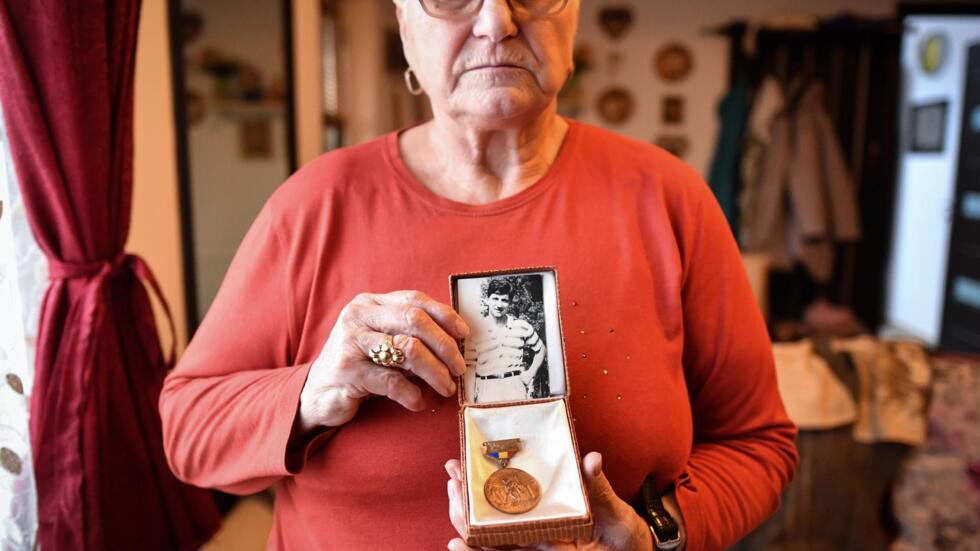
Almost 30 years later, his mother Elena Bancila is pinning her hopes for justice on the trial of former president Ion Iliescu for crimes against humanity — the most prominent leader to face charges.
Bancila, now 75, is among the victims gathering for a preliminary hearing in Bucharest on Friday, the first step in a trial expected to take months.
She believes Iliescu, who took control of the government on December 22, is responsible for the death of her son.
The 89-year-old former leader, once a senior communist who served as the first president of post-revolution Romania, rejects the accusations and is not expected to appear in court on Friday.
Romania was the last Soviet satellite to overthrow a communist regime during a bloody revolution that began on 15 December 1989 in the western city of Timisoara.
Seven days later, hundreds of thousands took over the centre of the capital Bucharest.
Dictator Nicolae Ceausescu fled in a helicopter but was arrested along with his wife and executed on December 25 after a summary trial.
– ‘Assassin behind the assassins’ –
Iliescu had already taken power by then and prosecutors accuse him of “contributing to the institution of a generalised psychosis” by spreading misinformation about supposed terrorists loyal to Ceausescu.
Prosecutors say Iliescu’s pronouncements increased the risk of “instances of friendly fire, chaotic shooting and contradictory military orders”, with 862 people killed after December 22.
According to historian Madalin Hodor, the suggestion of the presence of “terrorists” was an attempt to divert attention from killings committed by the Securitate secret police and the army in the weeks leading up to Ceasescu’s fall.
An investigation into the bloody aftermath of the revolution has been opened and closed several times over the past three decades, adding to the pain and frustration of survivors and families of victims who long for justice.
Marius Mioc, who participated in the early hours of the uprising of Timisoara, told AFP: “The presence in high public office of people whose interest was to hide the truth has diverted the investigation and delayed the start of the trial.”
“Iliescu is the assassin behind the assassins,” says a sobbing Elena Bancila, who has kept her son’s blood-stained trousers and his bullet hole-ridden coat.
“He wanted to keep Romanians indoors, afraid that they would also rise up against communism’s second tier, to which Iliescu belonged,” she added.
– ‘We were humiliated’ –
In addition to Iliescu, former deputy prime minister Gelu Voican-Voiculescu and former military chief Iosif Rus will also be tried for crimes against humanity.
Nicoleta Giurcanu, a slight 44-year-old woman with short blonde hair, is another of the victims who has spent years trying to “reconstruct the puzzle” of her traumatic experiences in December 1989.
On 21 December, at the age of 14, she joined anti-Ceausescu protesters in central Bucharest alongside her brother and her father.
Spared by the bullets that killed 50 other people that night, they were arrested and taken first to police headquarters and then prison.
“It was horrible, we were beaten, humiliated,” she told AFP.
Separated from their father, Nicoleta and her brother were not released until the evening of December 23.
Nobody has ever been tried for the abuses.
She also holds Iliescu responsible, saying his party had “risen to power by taking advantage of the crimes of December 1989”.
“I want to see Iliescu in prison if it’s only one day,” she says.
Bancila, who for 30 years has kept her son’s unwashed last coffee cup, thinks the trial might finally “wash the shame of a judiciary which pretended it was free”.
“I’ve been waiting for justice for 30 years, because they took my son’s right to enjoy the freedom he was fighting for in the street”, she said.
© 2019 AFP
…………………………………………………
Elena Bancila’s is a sad and tragic story. Of course, it is very important to know the details of how her son, Bogdan Serban Stan, died, and how the broader public narratives of December 1989 have distorted memory and interpretation of those details. Let us go back then, to 1990-1991, when the details were still fresh, for Elena Bancila, and for those who were with her son, when he was shot…
“Un alt lucru, deosebit de important pe care mama acestui tinar cazut in Revolutie ni-l semnaleaza, este dimensiunea glontului cu care el a fost impuscat. ,Mergind la Spitalul Vitan-Birzesti, unde fiul meu a decedat pe masa de operatie, am vazut fisa medicala in care era descrisa operatia facuta fiului meu, precum si patru clisee radiografice, reprezentind rana prin impuscare de la sold, clavicula stinga fracturata de al doilea glonte, care i-a perforat plaminul sting, oprindu-se in vertebra T 9 a coloanei vertebrale. De fapt, al treilea cliseu arata tocmai glontele ramas in sire spinarii, intrerupind fascicolul de maduva. Ultimul cliseu reprezenta toracele, unde se distingea, foarte vag, doar plaminul drept, restul fiind o imensa pata produsa de puternica hemoragie interna care se declansase la patrunderea…glontului. De ce v-am povestit toate aceste lucruri? Pentru ca in fisa medicala am citit, si aceasta se poate demonstra si pe baza cliseului, ca diametrul orficiului produs in vertebra T9 avea diametrul de 6 mm, ceea ce demonstreaza clar ca arma folosita pentru asasinarea fiului meu a avut calibrul sub 6 milimetri. Deci, daca cel putin oficial, trupele MAN aveau in dotare amre de calibru 7,62 mm, iar trupele MI–arme cu calibrul de 9 mm, cine si cu ce fel de arma a tras, atunci, in fiul meu. Mai exact in dotarea cui se aflau arme cu calibrul sub 6 mm in seara zilei de 22 decembrie 1989?”
Cristina Balint si Nicolae Tone, “Eu nu pot fi cumparata,” Tineretul Liber, 22 septembrie 1991.

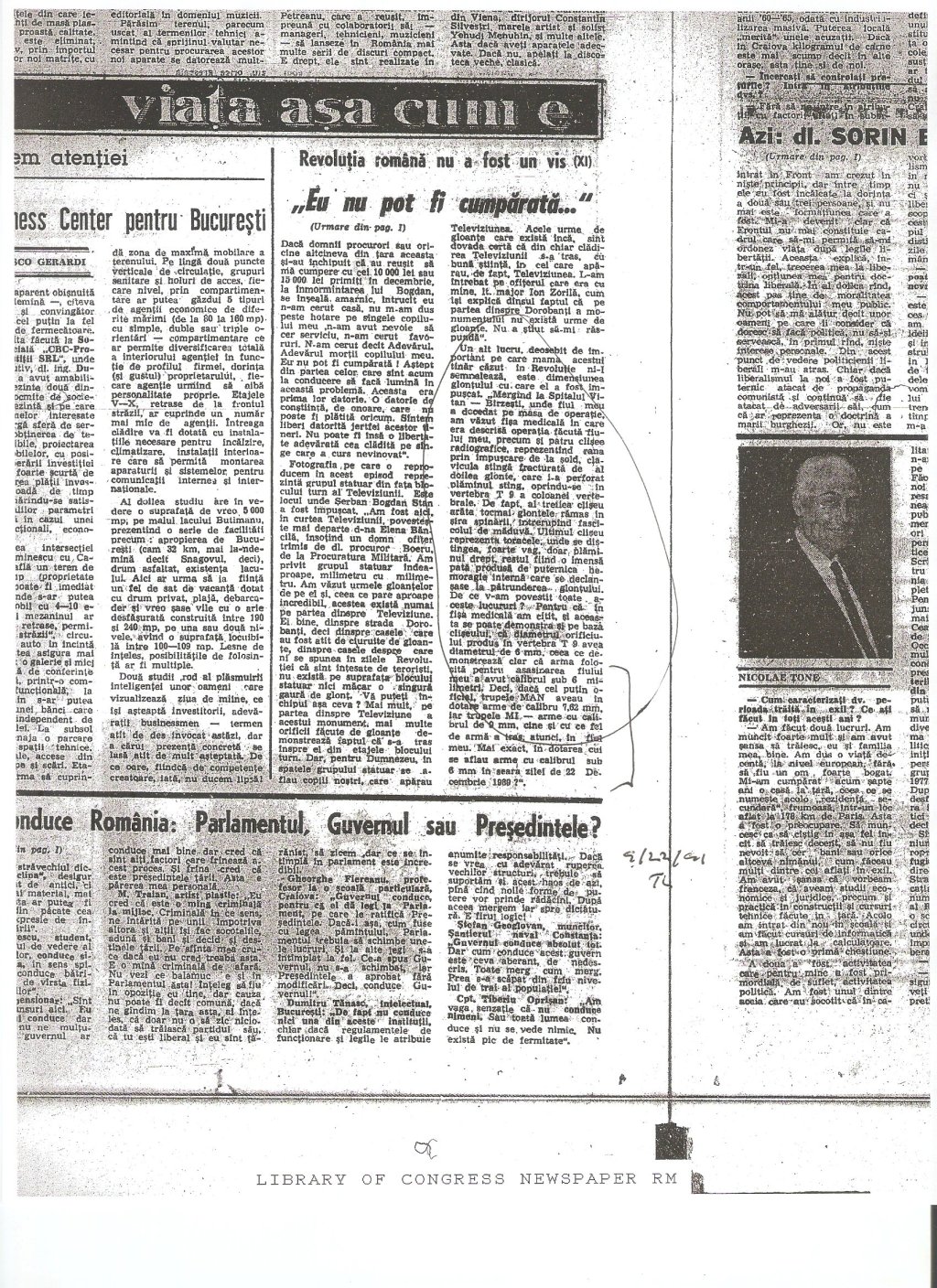
,Am insistat la dl. procuror Mugurel Florescu sa se faca ancheta, sa se vada cine a admis folosirea unei astfel de arme, cae este de productie romaneasca. Mi s-a raspuns ca o sa se ancheteze, dar sa am rabdare. Nici pina azi, iata, nu mi s-a dat raspuns, nu s-a facut nici o cercetare in privinta aceasta…’ Bineinteles, afirmatiile d-nei Bancila trebuie verificate. Un raspuns in aceasta directie al organelor de ancheta trebuie sa fie dat fara intirziere. De ce el nu a fost, oare dupa luni si luni de zile, inca formulat? Sa fie, apoi, o legatura directa intre refuzul anchetarilor de a efectua o cercetare atenta a depozitiei mamaei tinarului impucat in decembrie si faptul, iarasi dubios, ca in clipa de fata nu se stie care este soarta celor patru radiografii facute lui Serban Bogdan Stan in scurta perioada de spitalizare de dinainte de deces? ,Nimeni nu stie ce s-a intimplat cu aceste clisee, ne spune nedumerita d-na Elena Bancila. Am sesizat Procuratura, aceste radiografii, care au termen de pastrare de cel putin 15 ani, fiind foarte importante. In special cea care face dovada ca glontele oprit in vertebra T9 a coloanei vertebrale este de un calbiru mai mic de 6 mm. Este cu totul incredibil ceea ce se intimpla….”
Cristina Balint si Nicolae Tone, “Daca altfel nu se poate, voi cere deshumarea fiului meu,” Tineretul Liber, 24 septembrie 1991.


“…Ma primeste dl. Tatulici plin de amabilitate si incepe sa ma chestioneze, sa vada ce stiu, cit stiu daca pot sau nu dovedi ceva din ceea ce spun…I-am spus doar atit, ca Bogdan a fost impucat cu arma sub 6 mm. ,De unde stiti aceasta?’ m-a intrebat. ,Pai daca orificiul din sira spinarii, din vertebra T 9, este de 6 mm, i-am raspuns automat obiectul care a produs perforarea trebuie sa fie mai mic decit 6 mm.’ I-am spus si faptul ca am aflat ca arma respectiva abia dupa Revolutie a aparut in dotarea armatei. Si mi-a pus atunci o intrebare: ,Puteti sa-mi dovediti ca aceasta arma nn era in dotarea armatei pe 22 decembrie?’ La care i-am raspuns: ‘Dar d-ta poti sa-mi dovedesti mie ca aceasta arma era in dotarea armatei, ca sa pot sa acuz armata de asasinarea copilului meu?”
Si apoi tergiversarea cercatorilor legale pe acest dosar, disparitia celor patru radiografii, nelamurirea in nici un fel a faptului daca armele cu calibrul sub 6 mm au fost sau nu folosite–si daca da de catre cine–in zilele lui Decembrie 1989….
Cristina Balint si Nicolae Tone, “De ce domnule Tatulici?” Tineretul Liber, 25 septembrie 1991.

articolul din Tineretul Liber invocat era despre Bogdan Serban Stan, jucator de rugby, impuscat cu un glont “vidia 6 mm” (Elena Bancila, Trage lasule!, p. 94)

One of the particularly moving stories of the December events is that of Bogdan Serban Stan, 21 years old and one of three members of the under-22 Rapid Bucuresti rugby team who perished in the events. Bogdan’s mother, Elena Bancila, was determined not to let the memory of her son be forgotten with his tragic death. Bogdan had demonstrated on the night of 21-22 December in University Square and returned to fight at Television where on the night of 23 December at 3:50 am he was shot by an assailant in civilian clothes: “The path of the ‘6 mm vidia’ cartridge blew a hole through his lung and ‘passed through’the T9 section of his spine, coming to a rest vertically in the bone marrow.”[45]
[45] Elena Bancila, Trage Lasule! (Bucuresti: Editura Victor Frunza, 1990), pp. 65-66 (from Adevarul, 13 January 1990), and quote from pp. 94-95. Bancila also claimed that a hospital nurse had told her some of those killed appeared to have been the victims of “exploding bullets” (see the series by Cristina Balint and Nicolae Tone in Tineretul Liber in September 1991, particularly part XI “Eu nu pot fi cumparata [I can’t be bought],” and part XII “Daca altfel nu se poate, voi cere deshumarea [If there is no other way, I’ll ask for his body to be exhumed], 22 and 24 September 1991 respectively). In this series, the bullet that killed her son is referred to as “under 6 mm.”
Nicolae Stefan Soucoup relates here the places from which the “terrorists” fired on the TV building and that they used infrared weapons whose light could be seen in the night. He then goes on to talk about the third front of battle from which the terrorists fired–from within the ranks of those defending the Television building. “Infiltration” was indeed a feature of the urban guerilla warfare in the “lupta de rezistenta” of the “terorists” (details to which I shall return at a later date). Soucoup then relates the tragic death of the well-known rugby star Bogdan Serban Stan, whom Soucoup claims told him: “I was shot by a civilian near me,” in Soucoup’s estimation, one of the terrorists who had infiltrated into the ranks of the defenders. In Soucoup’s account in the 1990 volume Revolutia romana in direct (pp. 133-134; posted below), he mentions the unusual caliber and type of bullet with which some of those in the vicinity of Television were killed or wounded.

(Nicolae Stefan Soucoup, interview by Nicolae Tone, Tineretul Liber, 21 decembrie 1991, page 3; xerox from Library of Congress)
–Si aici am vazut acea luminita rosiatic-violacee, luminita zarita prima oara in Piata Dorobanti. Militarii de profesie mi-au confirmat ca este vorba despre o luneta cu infrarosii. Fiind noapte, nu aveam tinta decit aceste luminite ,plimbatoare’. Spun ,plimbatoare’ pentru ca ea aparea la intervale diferite in diverse locuri, ceea ce m-a determinat sa cred ca nu erau prea multi tragatori inauntru. Erau putini, dar nu trageau niciodata din acelasi loc….Eram asezati in spatele cabinei de la intrarea de pe Calea Dorobanti, fiind prinsi intre trei tiruri de gloante. Se tragea din fata noastra, de pe strada Pangratti, cit si din lateral, din imobile de pe Dorobanti, strada Teheran, strada Pictor Rosenthal….(–Si al treilea tir de unde venea?)–Al treilea tir venea dinspre curtea Televiziunii si din blocul Turn al Televiziunii, dar ne tintea pe noi, care aparam institutia, cit si pe manifestanti, si nu pe cei care ne atacau. Acest tir apartinea celor infiltrati printre noi, dar care, in realitate, erau de cealalta parte a baricadei. (–Va rog sa-mi explicati mai pe larg aceste afirmatii.)–Va pot da un exemplu, foarte cunoscut deja. In dimineata zilei de 23 Decembrie, pe la orele 4, la o mica distanta de mine, respectiv, linga grupul statuar din fonta, a fost impuscat un tinar, Stan Bogdan Serban, despre care chiar dv. ati scris pe larg. Adus pe subtiori de doi revolutionari, acesta ne-a spus cu vocea stinsa: ,Am fost impuscat de un civil de linga mine!’ Aceste cuvinte ale lui nu le pot uita. Mi-este foarte clar ca Bogdan Serban a fost victima tocmai a ,teroristilor’ infiltrati printre noi.

Nicolae Stefan Soucoup: Intre orele 5,00 si 7,00 [23 decembrie 1989] trageri intense. La un moment dat, dintr-una din cladiri se trage asupra sa cu arma cu infrarosu, calibru 5,6 mm (retine glontul)….In ziua de 24 decembrie ora 7 tir puternic spre casa scarii de la pasarela (din cladirea Studiourilor); gloantele care ricosau erau d calibrul 5,6 mm.


 Roland O. Thomasson, PHD
4 thoughts on “Fact Checking articles on the 30th Anniversary of the Romanian Revolution (II): Romania’s 1989 revolution generation await ex-president’s trial (29 November 2019; Elena Bancila, mama lui Bogdan Serban Stan)”